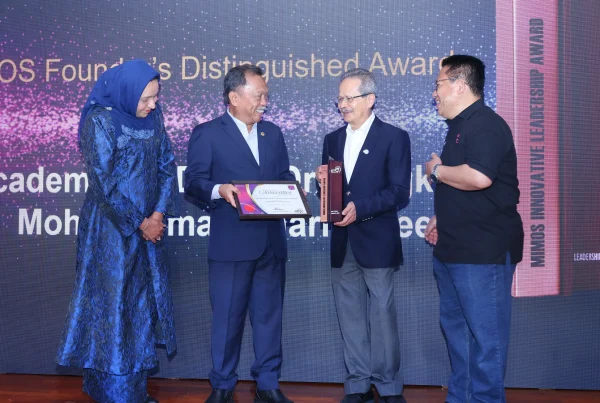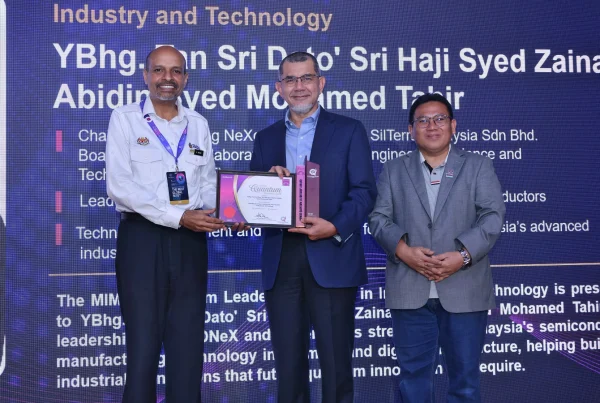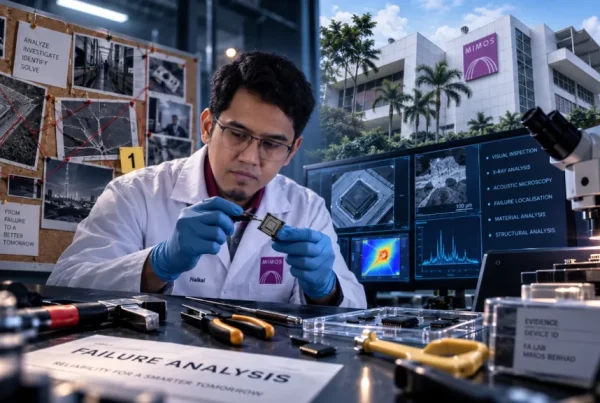
Malaysia has built strong technology capabilities. The next challenge is connecting R&D more deliberately to national needs, industry problems and market opportunities, and creating a clearer pathway towards adoption and scale.
Malaysia has built considerable capabilities in research, technology and innovation over several decades. As emerging technologies accelerate and global competition intensifies, an increasingly important question is how we decide where to focus our R&D resources, and how those investments ultimately translate into industrial, economic and societal value.
From a technology planning perspective, this question begins much earlier than commercialisation.
It begins with understanding the need.
The discussions at the National Innovation and Commercialisation Expo (NICE) 2026 reinforced this point repeatedly. Across conversations on future industries, mission-driven innovation, artificial intelligence and technology commercialisation, a common theme emerged: technology creates value when it is connected to a real market, industry or societal problem.
This may sound straightforward, but it has significant implications for how we plan R&D.
 R&D should not begin with technology alone
The conventional innovation journey is often viewed as starting with research, followed by prototype development, validation and eventually commercialisation.
But if the market is considered only towards the end of that journey, we may eventually find ourselves asking:
“Who will adopt the technology we have developed?”
A more market- and mission-informed approach starts with a different question:
“What problem are we trying to solve, for whom, and why does it matter?”
This was reflected strongly during NICE 2026. In discussing ASEAN’s future industries, Iwan Setiawan emphasised the importance of looking first at the market and ASEAN’s structural characteristics rather than beginning with whichever technology happens to be attracting global attention.
Similarly, discussions on scaling AI repeatedly returned to the importance of starting with the business problem and working backwards towards the appropriate technology. An organisation seeking to reduce a process from weeks to hours, for example, has a measurable objective. AI may be part of the solution, but the technology is not itself the objective.
For technology planning, the distinction matters.
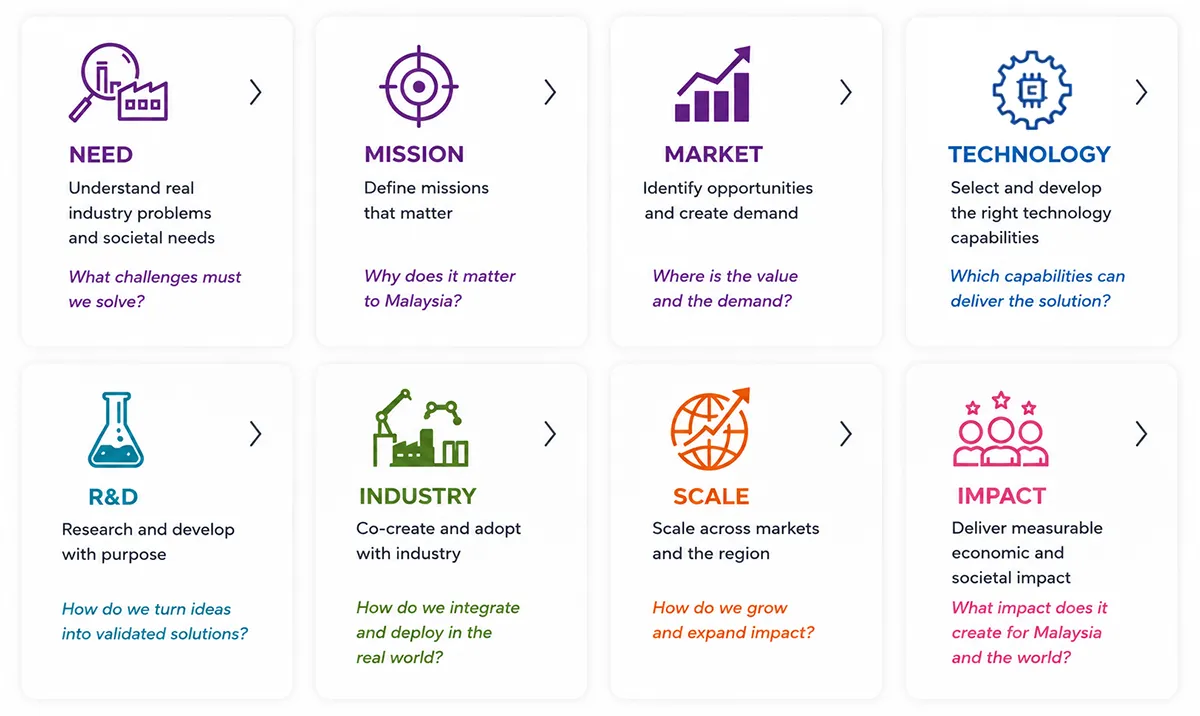
A useful way of framing the journey is:
Need → Mission → Market → Technology → R&D → Industry → Scale → Impact
This should not be interpreted as a rigid linear process. Innovation is iterative. Markets change, technology creates new possibilities, industry requirements evolve, and R&D itself can open opportunities that were previously impossible.
The important principle is that needs, markets and intended outcomes should influence R&D upstream, not only after a technology has been developed.
From technology foresight to opportunity foresight
Technology foresight remains essential, particularly as AI, semiconductors, advanced electronics, quantum technologies and other emerging fields develop rapidly.
However, knowing which technologies are advancing is only part of the planning challenge.
The more strategic question is:
Where will emerging technologies intersect with market demand, national priorities and Malaysia’s existing capabilities?
This moves technology planning beyond identifying technology trends towards identifying strategic opportunities.
Malaysia does not necessarily need to compete at every layer of every emerging technology.
In AI, for example, the NICE 2026 discussions suggested that Malaysia could build on domain capabilities in areas such as semiconductors, manufacturing and Islamic finance rather than attempting to replicate global hyperscalers or foundational AI model companies.
The same principle can apply more broadly.
Our opportunity may lie in identifying combinations where Malaysia already possesses industrial capability, domain knowledge, infrastructure or market access, and where emerging technologies can create differentiated value.
In other words, the strategic question is not simply:
“What is the next technology?”
It is:
“Where can Malaysia create an advantage with it?”
The difficult middle: moving from pilot to scale
Malaysia has demonstrated considerable ability to undertake research, develop prototypes and implement proof-of-concept (POC) projects.
But a successful POC is not yet a successful innovation.
The transition into production introduces a different set of challenges: real-world data, integration with legacy systems, cybersecurity, regulatory requirements, procurement, financing, talent, operational ownership and customer acceptance.
This pilot-to-scale gap emerged repeatedly during NICE 2026.
The AI scaling discussion highlighted how pilots can perform well using controlled datasets but encounter difficulties when exposed to fragmented production data, multiple systems and cross-organisational governance requirements.
This suggests that commercialisation cannot be treated as an activity that begins when R&D ends.
Industry engagement needs to happen much earlier.
Researchers understand technology. Industry understands operational problems, customers, production environments and commercial constraints. Deployment partners understand integration and implementation. Government and regulators provide the frameworks within which solutions can operate.
Bringing these perspectives together earlier increases the probability that a technically successful R&D outcome can also become an adoptable solution.
Mission-driven R&D can provide the connection
Not every important R&D programme will begin with an immediate commercial market.
Some begin with a national need.
Food security, energy security, healthcare, ageing, industrial competitiveness and technological sovereignty are examples of challenges where the market alone may not initially provide sufficient direction.
This is where mission-oriented innovation becomes relevant.
The NICE 2026 discussion on mission-oriented initiatives proposed moving beyond isolated technology projects towards portfolios organised around measurable societal and national challenges. Rather than selecting one technology in advance, a mission can bring together multiple technological pathways and stakeholders around a common outcome.
Consider food security.
The solution is unlikely to be ‘AI’ alone.
It may involve AI, sensors, semiconductor devices, satellite technologies, biotechnology, automation, advanced materials and data infrastructure, each addressing different parts of the problem.
The mission provides the why.
The market helps determine where value can be created and sustained.
Technology and R&D provide the how.
Industry provides the pathway to deployment and scale.
Investment should ultimately build capability
Malaysia continues to attract significant technology investment. This creates important opportunities for infrastructure, employment and participation in global value chains.
But over the longer term, another question becomes increasingly important:
What capabilities are we building and retaining in Malaysia?
Investment and capability are related, but they are not identical.
Sustainable technological advantage comes from accumulating engineering expertise, intellectual property, specialised talent, local suppliers, R&D capability and companies able to move progressively higher in the value chain.
This was also reflected in the NICE 2026 discussions on strategic industries, where the importance of capturing greater domestic value from areas such as semiconductors and data infrastructure was highlighted.
The longer-term ambition should therefore include not only attracting technology investment, but enabling Malaysian organisations to become increasingly capable of designing, developing, integrating, owning and exporting technology.
Malaysia to ASEAN, and ASEAN to the world
Scale does not necessarily require Malaysian technology companies to move immediately from a domestic market to global competition.
ASEAN provides an important opportunity in between.
With a population approaching 700 million, a substantial manufacturing base and many shared challenges, ASEAN can provide a valuable environment for solutions developed in Malaysia to achieve regional scale. NICE 2026 highlighted the region’s demographic transitions, productivity differences, climate vulnerabilities and rapidly evolving digital economy as potential sources of future industry opportunities.
For suitable technologies, the pathway could therefore become:
Develop in Malaysia → Validate with Industry → Scale across ASEAN → Compete Globally
This also reinforces why market understanding should begin early in the R&D journey. A technology developed only around a narrowly defined domestic requirement may be more difficult to scale than one designed from the outset with regional applicability in mind.
Connecting technology planning with industry
For those of us involved in technology planning, the challenge is therefore not simply to identify the next emerging technology.
It is to understand where technology can create differentiated value for Malaysia, which capabilities need to be developed, where partnerships can accelerate progress, and how those choices connect to industries and markets capable of taking them to scale.
This is where technology foresight, market intelligence, R&D planning and industry engagement need to come together.
At MIMOS, this connection is particularly relevant as we work across strategic technology domains including AI, semiconductors and advanced electronics, alongside other emerging technologies.
The objective is not simply technology development for its own sake.
It is strengthening the pathway through which technology capabilities can address meaningful national and industry needs and ultimately create measurable impact.
The progression provides a useful reminder:
Need → Mission → Market → Technology → R&D → Industry → Scale → Impact
Malaysia has already built a strong foundation in science, technology and innovation.
The opportunity ahead is to connect that foundation more deliberately to the problems that matter, the markets that need solutions and the industries capable of scaling them.
That is how we move from technology foresight to opportunity, from R&D to industry, and from innovation to impact.
Building the next opportunities together
MIMOS welcomes collaboration with industry, government, academia and technology partners to identify strategic challenges, co-develop technology solutions and accelerate their journey from R&D to deployment and scale.
For organisations exploring how AI, semiconductors, advanced electronics and emerging technologies can address industry challenges or create new market opportunities, we welcome the opportunity to explore how we can collaborate.
By Raja Mariam Ruzila Raja Ahmad Sufian
Head, Technology Planning & Advisory Division
Corporate Planning & Strategy Sector
MIMOS Berhad