By Maizatul Amira binti Muhamad, Raja Marian Rusila binti Raja Ahmad Sufian & Farah A’dibah binti Asmadee
“Would you hand your personal information to someone you’ve just met?”
Probably not.
Yet every day, we share our personal information with websites, mobile apps, online stores, digital payment platforms, and government services with just a click of the ‘Accept’ button.
Trust has become the invisible foundation of our digital lives. Every day, we rely on digital services to communicate, work, shop, access essential services, and make decisions that affect both our personal and professional lives. But what exactly makes people trust digital services?
Digital trust is the confidence that the people, information, and digital services we interact with online are authentic, secure, reliable, and used responsibly.
As artificial intelligence continues to reshape the digital landscape, the question of trust has become even more urgent, especially as people are asked to place greater confidence in systems that are increasingly complex, automated, and data-driven. Understanding what builds, strengthens, and sustains digital trust is therefore more important than ever, not only for encouraging adoption but also for ensuring that digital innovation develops in a way that feels safe, reliable, and responsible.
Recognising the importance of this challenge, the National Dialogue on Trusted Intelligence on 8 July 2026 brought together participants from government, industry, academia, and the technology community to explore the opportunities and challenges of building a trusted digital ecosystem in Malaysia. Through discussions and knowledge sharing, the event provided a platform to exchange perspectives on emerging technologies, digital trust, and the importance of collaboration in addressing evolving digital threats. As part of the programme, MIMOS conducted an interactive poll to capture participants’ perspectives in real time.
The insights presented in this article are drawn from the responses of 86 professionals across Malaysia’s government, ICT, and academic sectors. Participants shared their views on what a trusted digital ecosystem should look like, the biggest challenges affecting trust today, and the technologies they believe can help create a safer digital future. Together, these findings provide a valuable snapshot of current perceptions on digital trust and the priorities for strengthening Malaysia’s digital resilience.
Their responses reveal valuable insights into what a trusted digital ecosystem should look like, the key challenges affecting digital trust today, and the technologies they believe can help build a safer, more trustworthy digital future. Building a trusted digital Malaysia is not solely about developing smarter technologies. It also requires responsible innovation, transparent governance, public awareness, and collaboration across government, industry, academia, and society. Together, these findings highlight an emerging ‘trust gap’, one that cannot be addressed by technology alone, but through a combination of innovation, responsible governance, and collaboration.
Trusted Digital Ecosystem
Spare a moment to think about what comes to mind when you hear the phrase ‘Trusted Digital Ecosystem’?
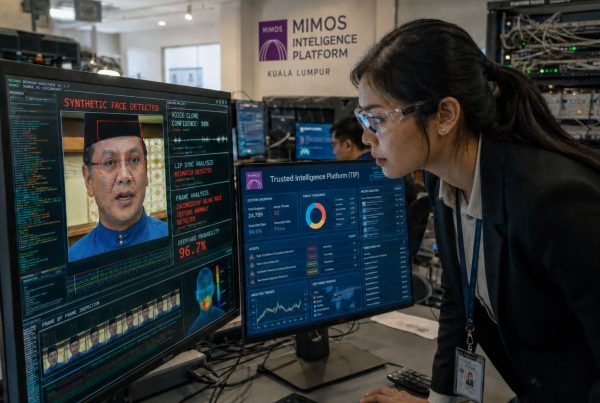
It can be anything that you may think. There is no right or wrong answer. Whether it be security, privacy, reliable information, safe use or even responsible use of technology. For some, trust begins with keeping personal information safe. For others, it means knowing that online information is genuine, digital services are reliable, or transactions can be completed securely. In today’s AI-driven world, trust can also mean having confidence that the videos we watch, the voices we hear, and the information we receive have not been manipulated by technologies such as deepfakes.
When asked about a ‘trusted digital ecosystem,’ respondents focused on defence rather than abstract philosophy. The terms that appeared most frequently were ‘security,’ ‘safety,’ ‘privacy,’ and ‘reliability’ (Figure 1). For this audience, trust is not a vague feeling, instead, it is a rigorous technical requirement. The word cloud also highlighted ‘Safe Transaction’ and ‘Blockchain’ as critical components of a reliable system. This technical-first mindset is further reflected in how they rank organisational trustworthiness.
Simply put, a trusted digital ecosystem is one where people can confidently interact, communicate, and transact online because they know their data, identities, and digital content are protected, authentic, and reliable. Together, all these qualities form the foundation of something people can trust.

Figure 1: Digital Trust Word Cloud
As AI becomes increasingly integrated into our daily lives, building trust is no longer just about protecting systems from cyber threats. It is also about ensuring that digital content can be verified, personal data is handled responsibly, and emerging technologies are developed in ways that people can understand and trust.
This is why building a trusted digital ecosystem goes beyond cybersecurity. It is about combining security, privacy, authenticity, transparency, and responsible innovation to create an online environment where people feel confident using digital technologies every day. Without trust, even the most advanced digital technologies cannot reach their full potential.
What is Breaking User Trust?
Trust takes years to build, but only seconds to lose.
Two key concerns in digital trust were highlighted during the interactive poll: 1. the biggest factor affecting trust in the digital ecosystem and 2. the weakest aspect of Malaysia’s digital landscape. From online scams and AI misuse to cybersecurity concerns, privacy risks, and regulatory challenges, the responses reveal where people believe the greatest improvements are needed. These findings provide valuable direction for policymakers,
researchers, and technology developers working to strengthen Malaysia’s digital resilience.

Figure 2: Current Challenges to Digital Trust
Privacy is the Primary Pillar of Trust
47% of the audience identified data privacy as the single most important foundation of digital trust (Figure 2). This finding reflects a growing expectation that organisations must not only collect personal information responsibly but also be transparent about how it is stored, used, and protected.
While protecting personal data remains fundamental, participants also highlighted growing concerns over fake information, AI misuse, and the authenticity of digital content. As AI becomes more integrated into everyday life, trust increasingly depends on people’s confidence that the information they receive is genuine, reliable, and verifiable. Today, trust is no longer just about securing systems, it is about ensuring that digital content can be verified and reliable.
Building a trusted digital ecosystem therefore requires more than technological advancement. It calls for strengthening Malaysia’s digital ecosystem by greater public awareness, stronger governance, responsible innovation, and trusted mechanisms that enable people to verify digital content with confidence.
When these elements work together, they create an environment where individuals, organisations, businesses and communities can safely embrace digital technologies with greater confidence, supporting Malaysia’s journey towards a safer, more resilient, and trusted digital future.
Are we really in control?
Almost every day we are asked to accept cookies, create an online account, share our personal information and upload identification documents. These interactions have become a routine part of modern digital life. We are effectively sleepwalking into a digital hostage situation. We find ourselves increasingly dependent on platforms and tools that demand our data as a ransom for participation.
Yet we also raise an important question:
Once we share our personal information, how much control do we actually have over it?

Figure 3: The Digital Trust Deficit
This data reveals a landscape defined by two trust deficits: comfort with sharing and control over data. The findings reflect a noticeable gap between people’s reliance on digital services and their sense of control over their own data. Participants rated their comfort with sharing personal data at 2.3 out of 5, suggesting that many remain cautious when providing personal information online, a figure that firmly places the average professional in the ‘uncomfortable’ zone. While the lack of comfort is damaging, the ‘Data Control’ is what truly breaks the digital contract. The perceived level of control over personal information scored 2.1 out of 5, a near-minimal rating that signals a widespread sense of powerlessness.
People recognise that sharing personal information is often unavoidable in today’s digital world. However, many are uncertain about what happens to their data afterwards, whether it is stored securely, shared responsibly, or protected from misuse.
This growing trust gap suggests that digital trust is about more than cybersecurity, it is also about giving individuals greater transparency, choice, and confidence in how their personal information is managed.
As digital services become increasingly essential, trust is no longer determined solely by convenience or functionality. People want confidence that their personal data is handled responsibly, protected from misuse, and managed with transparency. Sharing information has become a necessity, but confidence in how that information is collected, stored, and used has not always kept pace with the rapid growth of digital technologies.
Using Technology to Trusting Technology
Artificial intelligence is creating new challenges, but it is also opening the door to new solutions.
As digital technologies become increasingly embedded in our daily lives, trust has become one of the most valuable foundations of the digital ecosystem. But where do people believe trust is most at risk?
Through our interactive poll results (Figure 4), participants identified the sectors they believe are most vulnerable to digital trust issues, from banking and finance to government services, healthcare, social media, and e-commerce. While banking and finance emerged as the leading concern, the findings highlight a broader reality: digital trust is no longer confined to a single industry. Every sector that relies on digital information, online services, or AI-powered technologies must be prepared to address growing challenges such as misinformation, identity fraud, and manipulated digital content.

Figure 4: The Technology-Enabled Trust Journey
Recognising these challenges naturally leads to another important question:
What gives people confidence when using digital services?
As AI continues to evolve, the focus is shifting from using technology simply to create digital content towards using technology to trust technology, where advanced tools help verify authenticity, strengthen confidence, and safeguard the integrity of digital information. Now, the challenge is no longer simply about using technology, it is about using technology to verify what is real.
For many, trust begins with strong security measures. Others place greater confidence in transparent policies, trusted brands, government endorsement, or positive user experiences. While each factor plays an important role, trust is not built through technology alone, it is earned through secure systems, authentic and verifiable information, transparent practices, and responsible governance.
Participants were also asked which technologies they believe are most effective in combating deepfake threats. From AI-powered detection systems and blockchain verification to digital watermarking, biometric authentication, and multi-factor authentication, the results demonstrate growing public confidence in technologies that not only generate digital content, but also verify its authenticity.
Each technology plays a different role.
AI-powered detection systems can identify manipulated videos, images, and audio. Blockchain verification can help confirm the authenticity and integrity of digital records. Digital watermarking allows creators to verify original content, while biometric authentication and multi-factor authentication strengthen identity verification and reduce the risk of fraud.
These priorities point towards a shared vision for Malaysia’s trusted digital future. The poll invited participants to imagine what a trusted digital ecosystem in Malaysia should achieve. Should it protect users from scams? Verify authentic information? Ensure privacy and transparency? Or simply make people feel safe online?
The reality is that a truly trusted ecosystem must encompass every one of these elements. Building a trusted digital ecosystem requires more than technological innovation. It requires collaboration across government, industry, academia, and society to ensure that trust remains at the centre of Malaysia’s digital transformation. By combining trusted technologies with responsible governance and cross-sector collaboration, Malaysia can build a digital future where people are empowered to interact, communicate, and innovate with confidence.
Key Takeaways
The insights (Figure 5) from the National Dialogue on Trusted Intelligence reveal one clear message: digital trust is no longer optional, it is essential.
The findings highlight that Malaysians expect more than secure digital systems. They want privacy, transparency, authenticity, and accountability. While strong security remains the foundation of digital trust, it must be complemented by authentic information, responsible governance, greater public awareness, and collaboration across sectors. Together, these elements create an environment where people can communicate, transact, and innovate online with greater confidence.

Figure 5: Summary of Audience insights from the result of interactive poll
Building a trusted digital Malaysia therefore requires a balanced approach. Emerging technologies such as blockchain verification, AI-powered detection systems, and digital identity solutions can help verify authenticity and strengthen confidence, but technology must be supported by greater public awareness, effective governance, and cross-sector collaboration. Ultimately, the goal is not simply to develop more advanced digital services, it is to create an ecosystem where people feel safe to communicate, transact, and innovate with confidence.
As Malaysia’s national applied research and development centre, MIMOS is advancing Trusted Intelligence through research and innovation in AI-powered deepfake detection, digital identity, blockchain verification, and trusted digital technologies that help verify the authenticity of digital content and strengthen confidence across the digital ecosystem.
MIMOS also welcomes collaboration with government, industry, academia, and technology partners to accelerate the development and adoption of trusted digital solutions, helping build a safer, more resilient, and trusted digital future for Malaysia. The future of AI is not just about creating smarter technologies, it’s about creating technologies that people can trust.
In the age of AI, building trust is no longer just about protecting technology, it is about using technology to help people trust technology.
Join the conversation. Visit mimos.my to learn how we are building Malaysia’s tech future.